
The Call Center
Hiring Playbook
Is Broken.
Most Leaders
Haven’t Noticed Yet.
If you run a contact center in 2026, you’ve probably felt it even if you haven’t named it. The applications are coming in. The recruiter is working the pipeline. The job boards are running. On paper, everything looks the same as it did three years ago.
But the seats aren’t getting filled. And the ones that do fill aren’t staying.
Most operations leaders are still running a hiring playbook built for a market that no longer exists. It worked in 2019. It mostly worked in 2022. It’s quietly failing now, and the symptoms are easy to blame on other things. Tight labor market. Bad economy. Kids don’t want to work. The usual.
But the real shifts are more specific than that, and they’re worth naming, because once you see them you can actually do something about them.
Why Call Center Hiring Funnels Are Failing in 2026
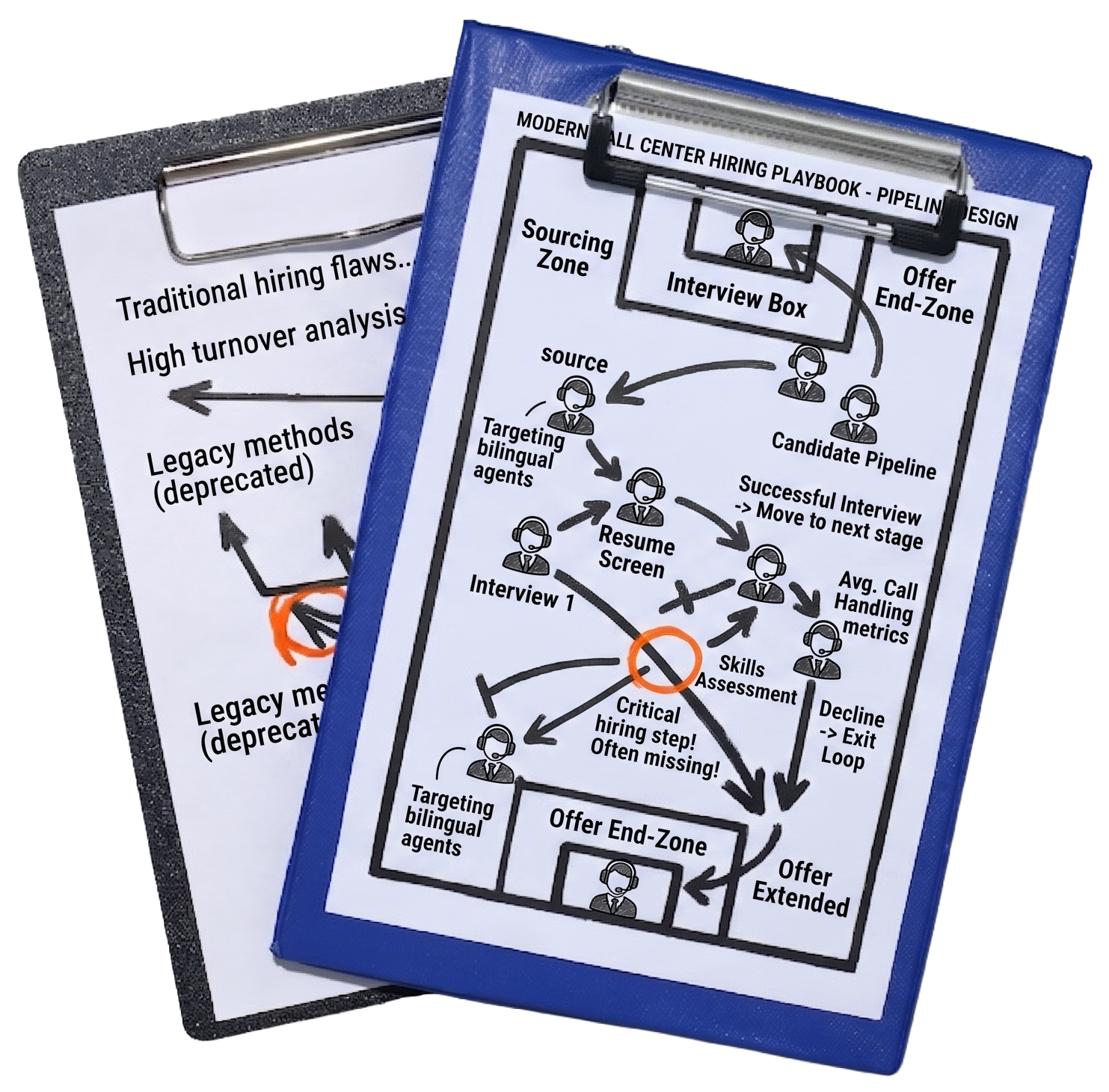
AI changed job seeking faster than most companies changed their hiring process. A candidate can now apply to 200 jobs in an afternoon. ChatGPT writes their resume. Auto-apply tools fire it off to every listing that matches a keyword. The resume that lands in your ATS looks qualified because it was engineered to look qualified.
So your pipeline has never been fuller. And your hiring has never felt harder.
The companies that tried to solve this with more automation made it worse. Automated screening on top of automated applications means nobody talks to a human until it’s too late. The genuinely good candidates, the ones who would have been great hires, get filtered out by a keyword mismatch or lose interest during a two-week silence. They take a job somewhere that moved faster.
Meanwhile the candidates who game the system get through. And you find out in week three of training that they can’t actually do the job.
The hiring funnel used to filter for fit. Now it filters for whoever is best at applying. Those are not the same people.
How the Gig Economy Is Killing Call Center Retention
The second shift is one most operations leaders feel but haven’t fully reckoned with. The entry level worker who would have taken a call center job ten years ago has options now that didn’t exist then.
Uber Eats pays less per hour on paper. But there’s no supervisor. No attendance policy. No script. No irate customer you have to keep on the line. You turn the app on when you want to work and turn it off when you don’t.
That is the job your call center is actually competing with for entry level talent. Not the contact center down the street. The phone in their pocket.
Most call centers haven’t updated their pitch to reflect that reality. They’re still selling stability and benefits to a generation that has watched stability disappear in every other part of their economic life and isn’t sure it believes you anymore. And they’re selling structure to people who just watched two years of remote work prove that structure isn’t actually required to get work done.
If your value proposition to a candidate hasn’t changed since 2019, you’re losing a fight you didn’t know you were in.
What Actually Works for Contact Center Staffing Today
The companies still winning at this aren’t the ones who automated their way through the problem. They’re the ones who got more human about it, not less.
That starts with accepting that the top of your funnel is now mostly noise. Pouring more money into job boards and more automation into screening doesn’t fix it. What fixes it is putting real human judgment back in front of the pipeline, early, before the good candidates get lost in the volume.
That’s the work we do at Hiregy. Our team does the first round screenings and interviews before a candidate ever gets to you. By the time you’re meeting someone, we’ve already talked to them, already checked the things that don’t show up on a resume, already figured out whether they’re going to show up on day one and stay past day ninety. You’re not interviewing applications. You’re interviewing people we already know.
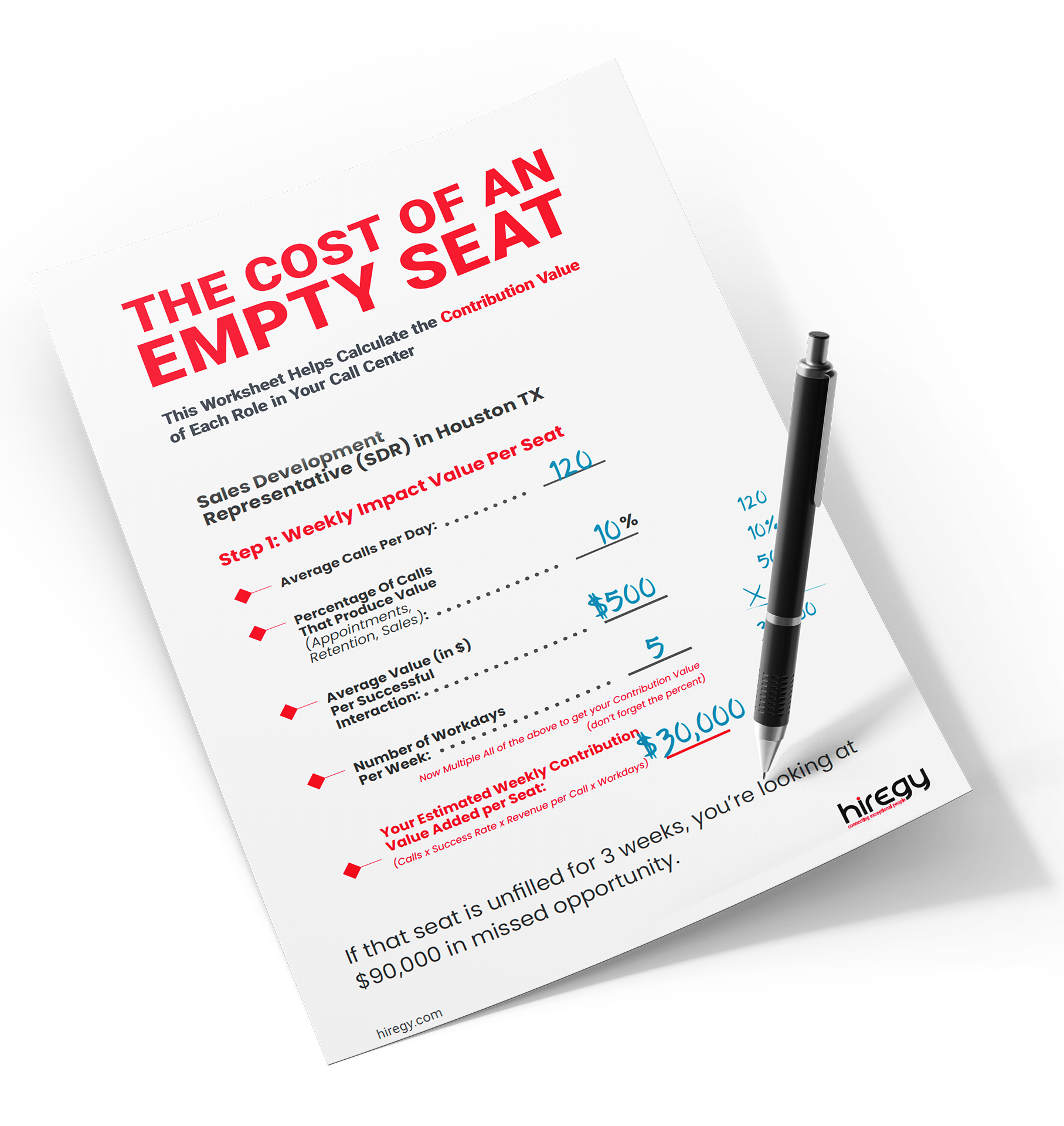
What Does an Empty Seat Really Cost During Tax Season?
High call volume + open roles = longer hold times, stressed teams, and lost opportunities.
Use our Cost of an Empty Seat Worksheet to quickly calculate the real impact of understaffing, in dollars and performance.
The other half is matching. Twenty plus years of staffing call center roles means we have a database of candidates we’ve already worked with, already placed, already watched succeed in specific kinds of environments. When we send you someone, it’s because we’ve seen them do this kind of work before. Not because their resume had the right keywords.
The gig economy piece is harder, and I’ll be honest about that. We can find you the right person. We can’t guarantee they’ll stay. What we can tell you is that when the match is right in the first place, retention gets dramatically easier. The candidates who leave in the first ninety days usually leave because something about the fit was wrong from the start.
But the rest of the retention equation is still on you. Pay has to be competitive. The environment has to be one people actually want to come back to. Training has to set people up to succeed, not watch them drown. We can put the right people in your building. You still have to be worth working for once they get there.
The Hiring Shift Contact Center Leaders Can’t Ignore
The call center leaders who are going to win the next five years aren’t going to be the ones with the best applicant tracking system or the most automated screening workflow. They’re going to be the ones who accepted that hiring got harder in a specific way and responded by getting more intentional, not more automated.
The market is telling you something. The question is whether your hiring process is still listening.
If any of this sounds like what you’re seeing in your operation right now, it probably is. We should talk.
FAQs
Why is call center hiring so hard right now?
The top of the funnel is flooded with AI-generated applications. Candidates apply to hundreds of jobs at once using auto-apply tools, so a full pipeline no longer signals qualified candidates. The screening process hasn’t caught up.
How does the gig economy affect call center retention?
Entry-level workers now have flexible, no-supervisor income options like rideshare and delivery apps. Call centers are competing with those alternatives, not just other contact centers. Pay and environment have to reflect that reality.
What does a call center staffing agency actually do differently?
A staffing partner like Hiregy does the first-round screening and interviews before candidates reach you. By the time you’re meeting someone, they’ve already been vetted for fit, reliability, and role alignment — not just keyword-matched to a job description.
More Insights from the Call Center Staffing Experts
From hiring tips to leadership strategies, our blog is your go-to resource for call center success. Dive into more articles from the staffing experts at Hiregy

Top Skills Employers Seek in Administrative Roles
Are you interested in an administrative position in Florida? Good news—in this booming state, where industries from tourism to technology are thriving, the need for skilled administrative professionals has never been greater.

The Modern Office and Its Impact on HR Roles
One of the most significant changes in human resources jobs in Florida has been the increased emphasis on technology. HR professionals are now responsible for managing various HR-related software applications and using social media and other digital tools to communicate with employees and recruit new talent.

How to Transition from Entry-Level to Mid-Level in Marketing Roles
The marketing field is constantly evolving, and it can be challenging for entry-level professionals to keep up with changes and stay on a fast-track to advance their careers. The good news is that by following a few key steps, you can set yourself up for success and quickly progress to mid-level marketing roles.