
How Credit Unions
Handle Tax-Season
Call Spikes Without
Burning Out Their Teams
Credit Union Staffing During Tax Season
Tax season is one of the few operational events credit unions can see coming months in advance, yet it consistently tests the resilience of member support teams.
Between February and April each year, member call volumes rise significantly, creating a familiar challenge for contact centers tasked with both responsiveness and service quality.
For many credit unions, this isn’t simply a matter of answering more phones. It’s about preserving the member experience amid pressure, protecting staff from burnout, and doing so without permanently inflating headcount.
What Drives the Surge During Tax Season
Tax season doesn’t increase call volume randomly. It creates a very specific kind of pressure on credit union contact centers because members are trying to resolve time-sensitive financial uncertainty, not general questions.
The most common trigger is refund-related activity. Members expect tax refunds to post quickly once filed, and when deposits don’t appear within anticipated timeframes, concern escalates fast. Even small delays can prompt calls, especially when members are relying on refunds for rent, debt payments, or major expenses. These calls aren’t just about timing, they’re about reassurance and trust.

That pressure has intensified in recent tax cycles due to challenges at the Internal Revenue Service itself. Entering the 2026 filing season, the IRS faced ongoing staffing constraints, raising concerns about slower processing and reduced access to taxpayer support. Reporting from Axios highlighted that fewer available IRS resources could lead to longer wait times and less clarity for filers, pushing many taxpayers to seek answers elsewhere. For credit union members, that “elsewhere” is often their financial institution.
As a result, contact centers see an uptick in calls that go beyond simple balance checks. Members frequently reach out to confirm whether refunds have been received, verify account balances after large deposits, or understand why funds are pending rather than available. In many cases, large refund deposits also trigger automated fraud or compliance alerts, creating additional calls from members who want immediate confirmation that their money is safe and accessible.
Documentation-related questions add another layer of complexity during tax season. Members often need help with their 1099-INT and 1099-MISC statements, direct deposit authorization forms, identity verification documents, or responding to IRS notices tied to delayed or rejected tax refunds. In many cases, they’re unsure whether the issue is related to account information, routing numbers, or discrepancies between IRS records and credit union data.
These interactions demand precision, clear communication, and empathy; especially when members are already anxious about delayed refunds or potential filing errors.
What makes tax season uniquely demanding isn’t just the increase in call volume. It’s the complexity and emotional weight of each conversation. Members aren’t calling casually; they’re calling because they need clarity, reassurance, and fast resolution. Credit unions that aren’t adequately staffed during this predictable seasonal surge risk longer handle times, frustrated members, and unnecessary strain on internal teams.
The Hidden Costs of “Powering Through”
It’s tempting for credit unions to respond to tax-season spikes by pushing existing staff harder. Increasing schedules, adding overtime, and narrowing break windows seems to keep queues manageable in the short term. But research indicates that this approach contains hidden costs.
High demand and limited control over work pace are strongly associated with stress and burnout in contact center roles. A peer-reviewed analysis published through the U.S. National Library of Medicine explains that job characteristics common in high-volume contact environments such as sustained cognitive load and emotional labor contribute to stress and reduced well-being when staffing does not align with workload.
For credit unions, the fallout from burnout shows up in higher call abandonment, more escalations to senior staff, and increased turnover shortly after peak season passes. Burnout doesn’t just affect morale; it impacts performance outcomes and member loyalty.
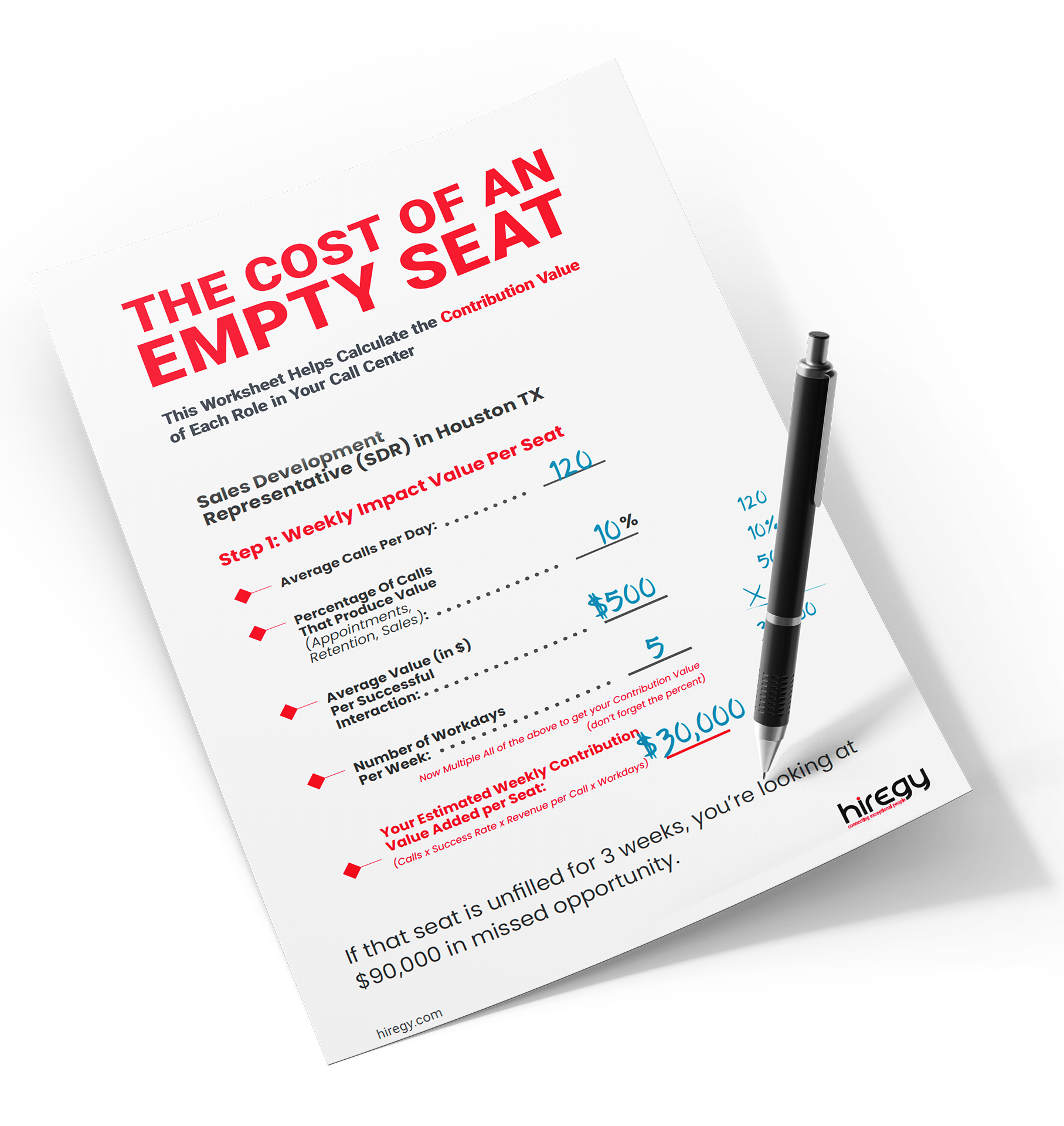
What Does an Empty Seat Really Cost During Tax Season?
High call volume + open roles = longer hold times, stressed teams, and lost opportunities.
Use our Cost of an Empty Seat Worksheet to quickly calculate the real impact of understaffing, in dollars and performance.
Why Traditional Staffing Models Fall Short
Many credit unions still base staffing decisions on average call volume. That approach works during stable periods, but tax season is not a surprise event, it is a predictable surge. Planning for averages almost guarantees understaffing when demand spikes.
Hiregy has seen this pattern repeatedly across seasonal cycles. As outlined in our article, Seasonal Staffing Challenges: Special Solutions for Busy Call Center and General Staffing Needs, call volume during peak seasons can increase dramatically in short windows, placing immediate strain on agents, supervisors, and service levels. When staffing adjustments are reactive instead of proactive, key performance indicators such as average speed to answer, first-call resolution, and member satisfaction begin to decline.
Many organizations attempt to solve this by adding temporary headcount late in the cycle. However, agents without prior exposure to credit union operations, terminology, and compliance requirements often increase average handle time and require additional coaching and oversight. While queues may shorten, overall efficiency and service quality can suffer.
The issue is not simply having more agents on the floor. It is having the right agents, at the right time, with the right level of experience. Seasonal volume requires a staffing strategy built specifically for predictable surges, not a last-minute response once pressure is already showing up in metrics and member feedback.
What High-Performing Credit Unions Do Differently
The credit unions that maintain service quality during tax season do three things well: they forecast demand early, invest in flexible and context-ready staffing, and protect their core teams from overload.
Forecast with Precision
Instead of reacting to email spikes or social mentions in real time, high-performing credit unions examine historical call data and seasonality trends to predict when volume will crest. This allows them to plan staffing levels weeks ahead of the peak, rather than scrambling once queues are already long.
Using data to drive operational decisions isn’t new, but many organizations still under-utilize their own call analytics. When historical usage patterns are incorporated into workforce planning tools, staffing forecasts become more accurate and lead to better staffing decisions.
Use Flexible Staffing, Not Just More Bodies
The most effective staffing solution isn’t simply adding warm bodies; it’s adding trained professionals who understand how credit union contact centers work.
Instead of tasking internal supervisors with training seasonal hires from scratch, leading credit unions bring in supplemental staff who already have:
- Experience in financial or membership environments
- Understanding of common account and member inquiries
- Exposure to compliance standards and member personalization
This reduces ramp-up time and protects both member experience and internal productivity.
Protect the Core Team
Experienced agents and supervisors are your greatest asset during any peak period. When they’re repeatedly pulled away from coaching, quality assurance, or strategic work to cover overflow calls, performance quality erodes in multiple dimensions.
Credit unions that protect their internal teams assign overflow or routine inquiries to flexible roles, leaving in-house staff to manage high-impact interactions, escalations, and member retention opportunities.
Preparing Now Pays Off Later
Tax season does not need to be a period of strain for credit unions. The organizations that perform best during peak periods treat staffing as a strategic lever, not an emergency response. By planning for predictable call spikes, aligning agent experience with member needs, and building flexibility into their workforce model, credit unions protect both service quality and employee well-being.
At Hiregy, we work alongside credit union leaders to design staffing strategies that anticipate demand instead of reacting to it. Our teams specialize in high-volume, regulated environments where accuracy, empathy, and consistency matter just as much as speed. Whether you are preparing for tax season, navigating another seasonal surge, or rethinking your long-term call center model, the right strategy starts with the right conversation.
If your team is already feeling pressure, or you want to ensure they don’t, let’s talk.
More Insights from the Call Center Staffing Experts
From hiring tips to leadership strategies, our blog is your go-to resource for call center success. Dive into more articles from the staffing experts at Hiregy

Before the Phones Light Up: How to Prepare Your Call Center for Spring & Summer Demand
Before the Phones Light Up: How to Prepare YourCall Center forSpring & Summer DemandSeasonal Demand In Call Centers Is Rarely Accidental.Whether...

AI Won’t Replace Recruiters, But Recruiters Who Use AI Will Win
Beyond the Algorithm:Recruiting SuccessComes From People, Not AICall Centers Still Need Human RecruitersCall center and sales leaders are asking the...

Top Grading Talent: Why the Best Leaders Rebuild Before They Hire
Top Grading Talent:Why the Best LeadersRebuild Before They HireThe New Year ResetAs 2026 approaches, call center and sales leaders are planning for...