
Top Grading Talent:
Why the Best Leaders
Rebuild Before They Hire
The New Year Reset
As 2026 approaches, call center and sales leaders are planning for growth. But before adding headcount, the best teams start with a simple step: evaluating who’s already on board.
The workforce has shifted. Work from home is no longer the standard. AI tools are changing job expectations and output. Many roles created two or three years ago no longer reflect the work being done today.
Meanwhile, Constellation Research found that 78% of organizations have increased automation to support productivity.
These shifts are forcing companies to rethink how they define performance.
If hiring feels harder or results have leveled off, the issue might not be the job market. It might be your current team structure. Before recruiting, ask three questions:
- Do current roles still match business goals?
- Are top performers challenged and compensated fairly?
- Are underperformers blocking progress?
Top grading starts here. Evaluating your team before Q1 gives you a clear picture of who’s driving results and where upgrades are needed. The call centers that make these assessments now will enter the new year ready to move faster, hire smarter, and win 2026.
Your Roles Might Be Outdated
Roles evolve, but job descriptions rarely do. Many were written years ago and have stayed the same while your business, tools, and customer expectations have changed.
If your team is still operating under old role definitions, you may be holding people back or misjudging performance. Hybrid schedules, AI tools, and changing workloads have redefined what productivity looks like.
Start with your most critical positions. Look at what success in those roles should deliver right now, not what it delivered two years ago. Then, update expectations and measurements to match.

In call centers, this review matters even more. Customer interactions are more complex, technology plays a bigger role, and the speed of response affects revenue.
Review your structure before hiring. Define each role based on current outcomes and tools, not tradition. You’ll create clarity for your existing team and accuracy for your next hire.
Some Employees Have Outgrown
(or Outpaced) Their Roles
As your call center grows, some employees grow with it. Others stay where they are. Over time, that gap becomes visible in results, collaboration, and initiative.
Top grading is about recognizing those differences early. It’s not personal, it’s performance. The goal is to identify who is elevating the team and who is simply maintaining the status quo.
This becomes critical as industries prepare for their busiest months. Call centers dealing in home services, home renovation, construction, and related sectors see a surge in demand during the spring and summer months. And, if your team isn’t ready, it can lead to lost revenue, long wait times, and unhappy customers. Net Promoter scores could plumet overnight.
The challenge is that underperformers rarely announce themselves. Productivity reports might look fine on the surface, but qualitative indicators like missed follow-ups, low engagement, or reluctance to adopt new tools, tell a different story.
Evaluate each role using consistent KPI metrics. Compare performance against current standards, not historical averages. Identify your top performers and create growth paths that keep them motivated. Then, be direct about where performance needs to improve.
Strong teams get ahead of their busy season by addressing performance gaps early. Waiting until Q1 to make changes only puts more strain on your best people.

See the RealNumbers for Yourself
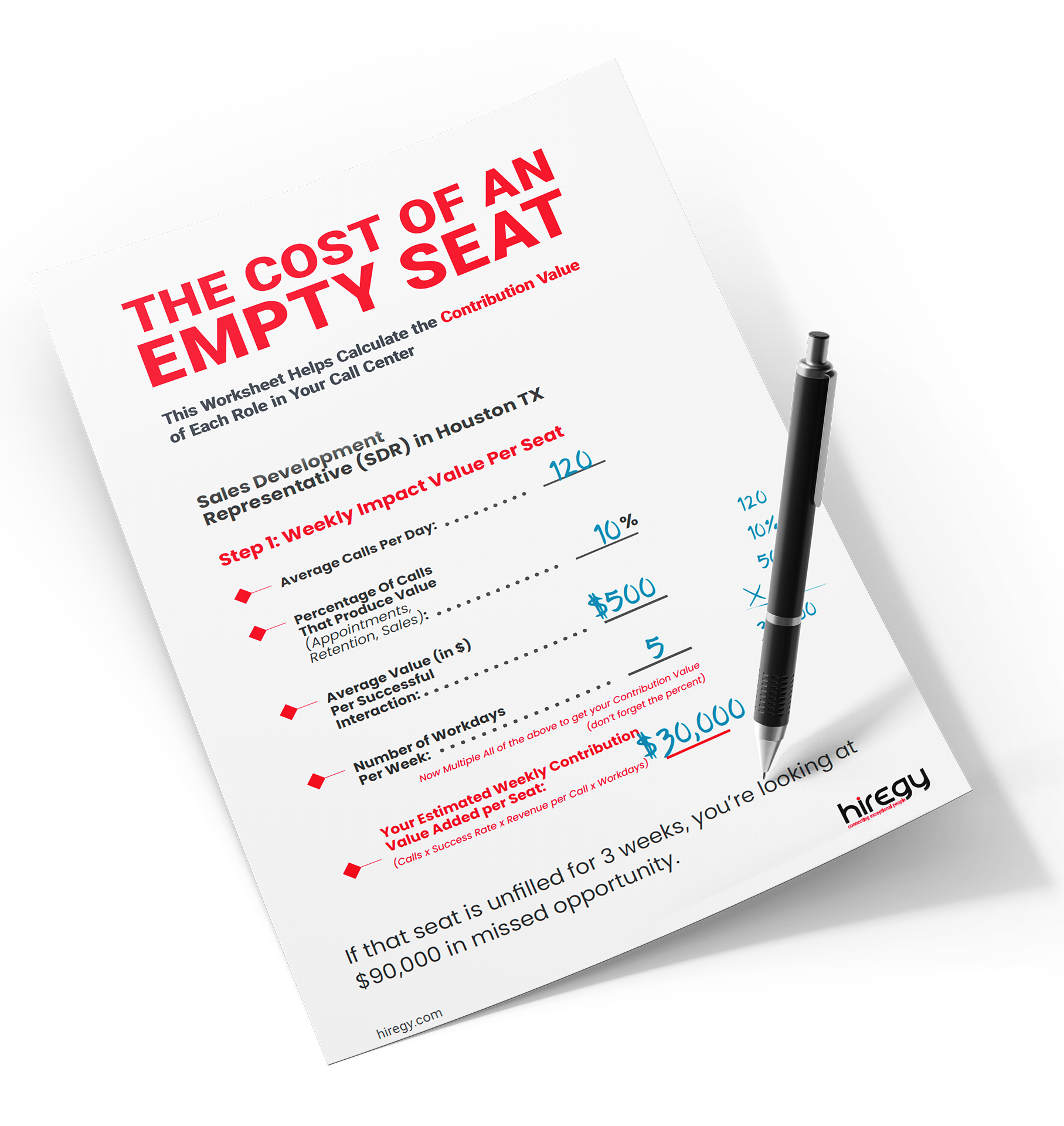
It’s one thing to talk about the hidden costs of unfilled roles. It’s another to actually see how much money your call center is losing every week. That’s where our Cost of an Empty Seat Worksheet comes in.
With just a few simple inputs — like call volume, conversion rate, and revenue per interaction — you’ll get a clear, dollar-based estimate of the Contribution Value of each role on your team.
Leaders nationwide have used this tool to:
-
Make the business case for faster hiring
-
Show executives the real impact of open seats
-
Plan smarter staffing strategies backed by data
Don’t guess what vacancies are costing you. Calculate it. Then use those numbers to protect your revenue and your team.
The Market Has Changed, And So Have Your Competitors
While you’re assessing your current team, your competitors are already making adjustments. They’re reviewing pay scales, updating job titles, and using AI tools like Microsoft Copilot to improve efficiency. The market is moving fast, and companies that wait to adapt fall behind.
Pay transparency has shifted how candidates compare offers. According to the Society for Human Resource Management, 70% of job seekers now expect clear salary ranges in postings. Businesses that still use outdated pay data risk losing qualified candidates before interviews even start.
Competitors are also investing earlier in the year. In home services and construction, hiring starts well before spring to prepare for peak demand. In call centers and sales, the same trend is happening, leaders are locking in top performers now to avoid shortages later.
At Hiregy, we see hiring trends as they happen. Every role we fill gives us a real-time view of pay rates and talent movement across Florida, Georgia, Texas, and the rest of the country. That insight helps companies stay competitive and move faster when demand picks up. If you want to see where the market stands right now, email us and we’ll share the latest data with you.
Review your pay structure and hiring plans early. The companies that prepare ahead of Q1 will set the pace for everyone else.
Your Hiring Process Is Still Catching Up
Once you identify gaps on your team, timing becomes everything. The longer you wait to act, the harder it is to attract the people you need.
Strong candidates move fast. According to LinkedIn, the average time to fill a role in the U.S. is 49 days. But in competitive industries like customer service, sales, and healthcare support, top candidates are often off the market within ten days.
Slow response times, too many interview rounds, or delayed feedback send the wrong message. The best people take it as a sign of indecision and move on to companies that communicate faster.
Simplify your process before hiring season begins. Define what you need, limit unnecessary steps, and make sure decision-makers are ready to move when a qualified candidate appears.
A quick, professional hiring experience reflects your company’s values. It tells candidates your team is focused, organized, and serious about growth, exactly the kind of environment top performers want to join.
Partner Early, Not When It’s Urgent
The best time to strengthen your team is before you need to. Some leaders wait until workloads spike or turnover hits to start recruiting. By then, the pressure is high and hiring decisions are rushed. Early planning changes that.
When you evaluate talent ahead of your busy season, you control the pace. You can refine roles, adjust compensation, and build a pipeline of qualified candidates before the need becomes critical.
This approach also gives you space to hire for fit, not just availability. The result is better performance and lower turnover when calls picks up.
Hiregy helps teams prepare early. We work with leaders to assess current staff, identify talent gaps, and plan for upcoming demand. Contact us before hiring becomes urgent so you can start the year ready, not reactive.
Build a Stronger Team Before 2026
Top grading is not about replacing people. It’s about getting clear on who drives performance and aligning your team for the year ahead.
As Q1 approaches, the strongest companies are already reviewing roles, setting updated goals, and planning their next hires. They’re not waiting for turnover or burnout to make changes. They’re acting early to protect growth.
Hiregy partners with leaders across the United States to evaluate current teams, identify gaps, and source qualified candidates fast. Whether you need to refine one role or prepare for a full-scale hiring season, our team is ready to help.
Start the year strong. Contact us to schedule a short call and see how Hiregy can help you build a stronger, more competitive team for 2026.
More Insights from the Call Center Staffing Experts
From hiring tips to leadership strategies, our blog is your go-to resource for call center success. Dive into more articles from the staffing experts at Hiregy
Salary Snapshot – February 2024
Florida Salaries: February 2024 Customer Service Position Salary Hourly Business type Call Center Manager $72,800 $35.00 Healthcare Claims Denials...

Essential Traits When Looking for Top Accounting and Bookkeeping Professionals
There’s no denying the importance of skilled accounting pros and bookkeepers in the business world. These professionals are the backbone of financial management, ensuring accuracy, compliance, and insightful financial reporting.

Mastering Salary Negotiations in Florida: A Job Seeker’s Guide to Earn What You Deserve
Finding a job in Florida usually includes one task that many job seekers struggle with: salary negotiation. Understanding the ins and outs of negotiating a salary offer is a skill and necessity when it comes to securing a financial offer that reflects your true value and expertise.